

Southeast Asia is home to 11 countries – Brunei, Cambodia, Indonesia, Laos, Malaysia, Myanmar, Philippines, Singapore, Thailand, Timor-Leste and Vietnam. When I first heard that Mount Kinabalu was the highest peak in the region, I didn’t think much and just accepted it without questioning.
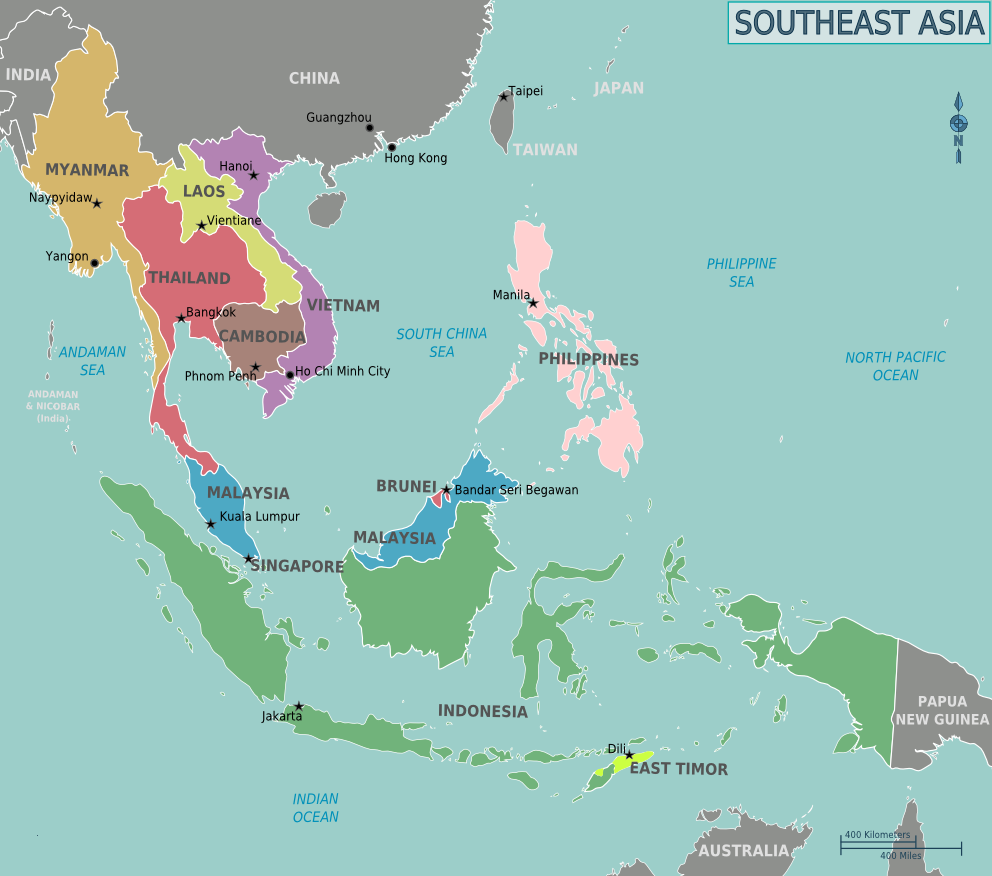
After summiting Mount Kinabalu, I started digging into the highest peaks across the region, looking for summits within my climbing limits. Then I came across an article on the Seven Summits where Puncak Jaya in Indonesia was identified as the highest peak in Oceania, and the question lodged in my mind – why is Mount Kinabalu the highest in Southeast Asia?
Here are the highest mountains in each ASEAN country:
Mainland Southeast Asia
• Myanmar – Hkakabo Razi, 5881m
• Vietnam – Fansipan, 3143m
• Laos – Phou Bia, 2819m
• Thailand – Doi Inthanon, 2565m
• Malaysia (Penisular) – Gunung Tahan, 2187m
• Cambodia – Phnom Aural, 1813m
• Singapore – Bukit Timah Hill, 164m
Maritime Southeast Asia
• Indonesia – Puncak Jaya, 4884m (New Gunea) / Gunung Kerinci, 3805m (Sumatra)
• Malaysia (Borneo) – Mount Kinabalu, 4095m
• Timor-Leste – Mount Ramelau, 2986m
• Philippines – Mount Apo, 2954m
• Brunei – Bukit Pagon, 1,850m
The conclusion seems obvious. Myanmar’s Hkakabo Razi is the crown. On further research, I found that there are many more 4000m+ mountains in both Indonesia and Myanmar that are way higher than Mount Kinabalu as well. So, how did Mount Kinabalu got that title?
Mount Kinabalu as the Highest Mountain in Southeast Asia
It all comes down to how you define Southeast Asia.
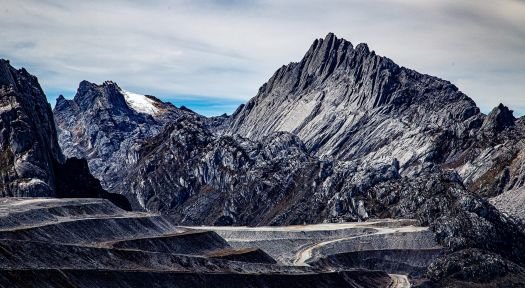
Puncak Jaya sits on the island of New Guinea which is widely considered part of Oceania, the same continental grouping as Australia. This is precisely why Puncak Jaya appears in the Seven Summits’ debates as a contender for the highest point in Oceania rather than Asia. When you remove Papau, Indonesia’s side of New Guinea, Indonesia’s next highest peak would be Mount Kerinci in Sumatra which drops well below Mount Kinabalu.
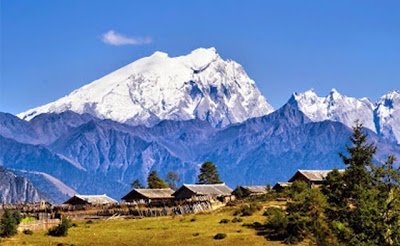
For Myanmar, Hkakabo Razi sits in the far north of the country in the Eastern Himalayas range that most geographers consider part of the South Asian or Central Asian mountain system. Some sources also place the distinct Hengduan Mountains system which contains several other 4000m+ peaks in Myanmar near the Chinese border, in a similar grey zone.
Excluding all the contestable peaks, Mount Kinabalu is a highest peak that sits unambiguously within Southeast Asia.
Is That a Satisfying Answer?
Honestly? Not really. The “highest mountain in Southeast Asia” isn’t a fixed truth. It depends on the framework you choose – political boundaries, geological systems or continental plates.
But boundaries are drawn by convention as much as by science. If Myanmar and Indonesia are considered part of Southeast Asia as whole countries, their highest peaks regardless of geological system should also count. After all, didn’t the eventual conventional understanding of this regional classification today come about as a result of considerations spanning across all these frameworks?
Nonetheless, what feels more meaningful than the title itself is what the mountain represents. Mount Kinabalu is undeniably the most accessible 4000m+ peak in Southeast Asia that offers a genuine summit experience, striking a rare balance between affordability, challenge and attainability. For many trekkers, Mount Kinabalu is the gateway to high-altitude climbing in Southeast Asia. See: The Ultimate Guide to Climbing Mount Kinabalu in 2026
Beyond labels and definitions, the vertical landcsapes across Southeast Asia is amazingly diverse. From the glaciated peaks of New Guinea to the granite crown of Mount Kinabalu, the volcanic slopes of Mount Kerinci, and the rolling highlands of Doi Inthanon, these towering landscapes are just as defining of the region as its beaches and rainforests. More importantly, these incredible peaks here are not just terrain. They are lived landscapes where layers of ecological richness intertwine with robust cultures and communities that have long been shaped by these environments.
Trekking in Southeast Asia is more than a nature exploration; it is an immersive encounter that deepens our understanding of the intricate connections between us and the natural world.
Part of the Highest Mountains Series.
Further Reading
https://www.britannica.com/place/Southeast-Asia
https://en.wikipedia.org/wiki/List_of_mountains_in_Myanmar
https://en.wikipedia.org/wiki/List_of_highest_mountains_of_New_Guinea
https://en.wikipedia.org/wiki/Boundaries_between_the_continents
https://www.researchgate.net/figure/Simplified-geological-map-of-Myanmar-and-the-Eastern-Himalayan-syntaxis-showing-major_fig5_331129493
https://www.theborneopost.com/2025/04/06/why-mount-kinabalu-still-southeast-asias-highest-peak/
https://education.nationalgeographic.org/resource/asia/
https://ourworldindata.org/world-region-map-definitions