Mount Kinabalu
Elevation
4,095m
Duration
2D1N / 3D2N
Climbing Season
Best Weather
Feb-Apr
Fitness Grade
Technical Grade
T2-T3
Starting Elev
1,886m
Min Elev Gain
2,209m
Location
Sabah, Malaysia
– Kinabalu National Park Office (Registration)
– Timpohon Gate (Starting Point)
– Panalaban Base Camp
– Sayat-Sayat Summit Checkpoint
– Low’s Peak (Summit)
Closest Town
Kundasang
Nearest Airport
Kota Kinabalu International Airport
(2hrs away from Kundasang)
Tap the links to save them on your google map
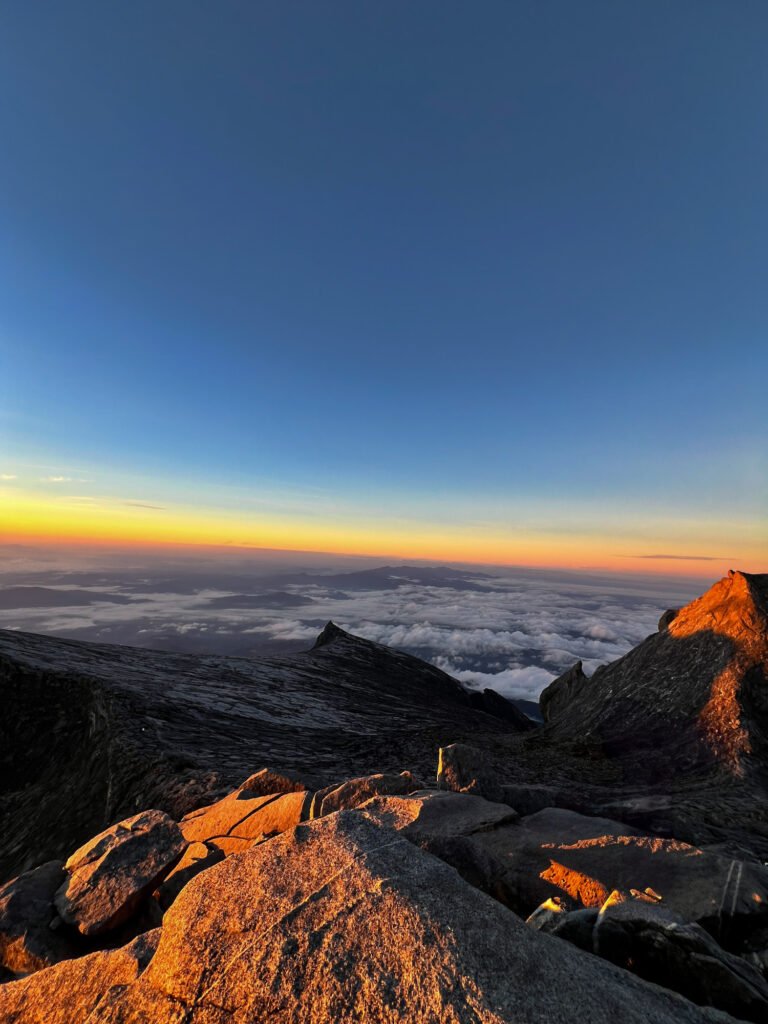
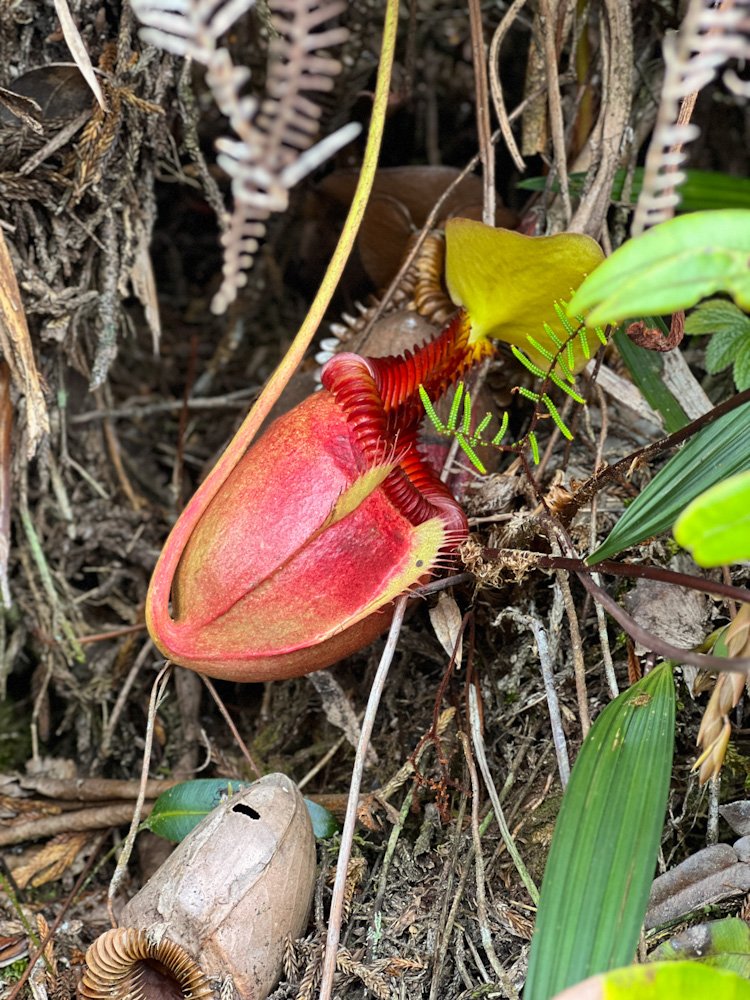
Rising 4,095m above the rainforests of Sabah in Borneo, Mount Kinabalu is one of the highest peak on Southeast Asia’s landmass. Nestled in the heart of Kinabalu Park, a UNESCO World Heritage Site, it is also one of the most biodiverse places on the planet. The ancient mossy jungle is home to thriving wild orchids, towering rhododendrons and the giant pitcher plant that can be found nowhere else. See: Why is Mount Kinabalu the highest in Southeast Asia?
Mount Kinabalu was my first 4,000m+ climb and it opened me up to the world of high-altitude trekking. On contrary to many, my favourite moment wasn’t at the summit but just before it. Where we slowed deliberately knowing we were close. I still remember how my breathing steadied and the urgency fell away. Each step stopped being about getting somewhere and became about simply being there — present, unhurried.
Cliché as it sounds, it is the journey that stays. Not the exhaustion, not the summit photo but the in-betweens many miss because they were just surviving the climb. Find out what to expect, how to prepare, and everything you need here to experience Mount Kinabalu for all it has to offer. When you stand on mountain the fully present, you will understand why it stays with you.
Table of Contents
⇾ What Makes Mount Kinabalu Worth the Climb?
⇾ Best Time to Climb Mount Kinabalu (2026 Weather Guide)
⇾ How Difficult Is Mount Kinabalu?
⇾ Are You Fit Enough to Climb Mount Kinabalu?
⇾ Altitude Sickness (AMS) on Mount Kinabalu: What Every Climber Should Know
⇾ What to Expect: Mount Kinabalu Itinerary – Terrain, Routes, Cut-Off Timings & Staying at Panalaban Base Camp
⇾ How Much Does It Cost to Climb Mount Kinabalu in 2026?
⇾ How to Book a Mount Kinabalu Climb: DIY Under S$500 vs. Package Tours
⇾ Packing Smart for Mount Kinabalu – Do You Need a Porter?
⇾ Before You Go: Important Notes for First-Timers
⇾ Mount Kinabalu Climb FAQ: Everything Else Not Covered Above
Jump to:
⇾ Mountain Stories: A Full Walkthrough of Our Mount Kinabalu Climb
⇾ Resource Guides
What Makes Mount Kinabalu Worth the Climb?
Mount Kinabalu is one of the most rewarding mountains to climb in the region where you get a genuine summit experience without requiring any technical climbing skills. It is also remarkably accessible. With an international airport just 2hrs away and the trailhead sitting a short 10min drive from the nearest town, the entire climb can be completed over a long weekend from anywhere in Asia. What makes it all the more enjoyable is the well-maintained trails and base camp facilities– unarguably among the best I have experienced on any high-altitude trek in Southeast Asia.
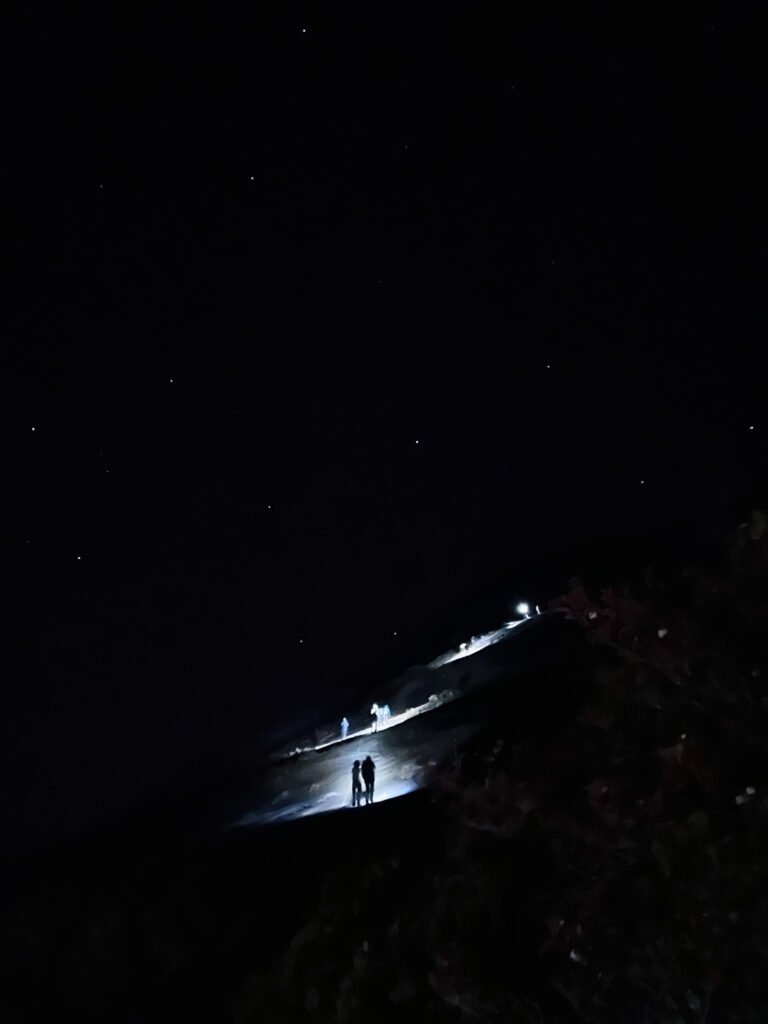
The summit hike is when it all comes together. Under a stars-filled sky, you trek following a quiet line of headlamps winding slowly up the mountain. At dawn, when you finally reach Low’s Peak and witness the first light breaking across Sabah, no one needs to tell you why the climb was worth it. If you’re an adrenaline-junkie, you can take it further by attempting the world’s highest Via Ferrata descent across the mountain’s dramatic rock face.
With its raw beauty, rich biodiversity and unmatched accessibility, Mount Kinabalu is an experience not to be missed by avid hikers. For first-timers, it is the perfect introduction to high-altitude climbing in the region.
Best Time to Climb Mount Kinabalu (2026 Weather Guide)
The best time to climb Mount Kinabalu is during the dry season, which is also the peak season from Feb to Sep with the first 3 months standing out as the clearest months. The only thing to note is only slightly more than 160 permits are issued per day and slots go fast during peak season so secure your slots early.
Below is a comprehensive weather guide including the temperature and expected trail conditions of Mount Kinabalu by month:
How Difficult Is Mount Kinabalu?
Mount Kinabalu sits in a sweet spot — challenging, yet achievable for most people. It is a non-technical climb requiring no special climbing gear. 2 days is more than enough for most climbers, though a 3-day option is available for those who wish to go at a slower pace. The challenge comes from three things: the long Day 1 ascent, Day 2 pre-dawn summit push and the effects of altitude above 3,000m.
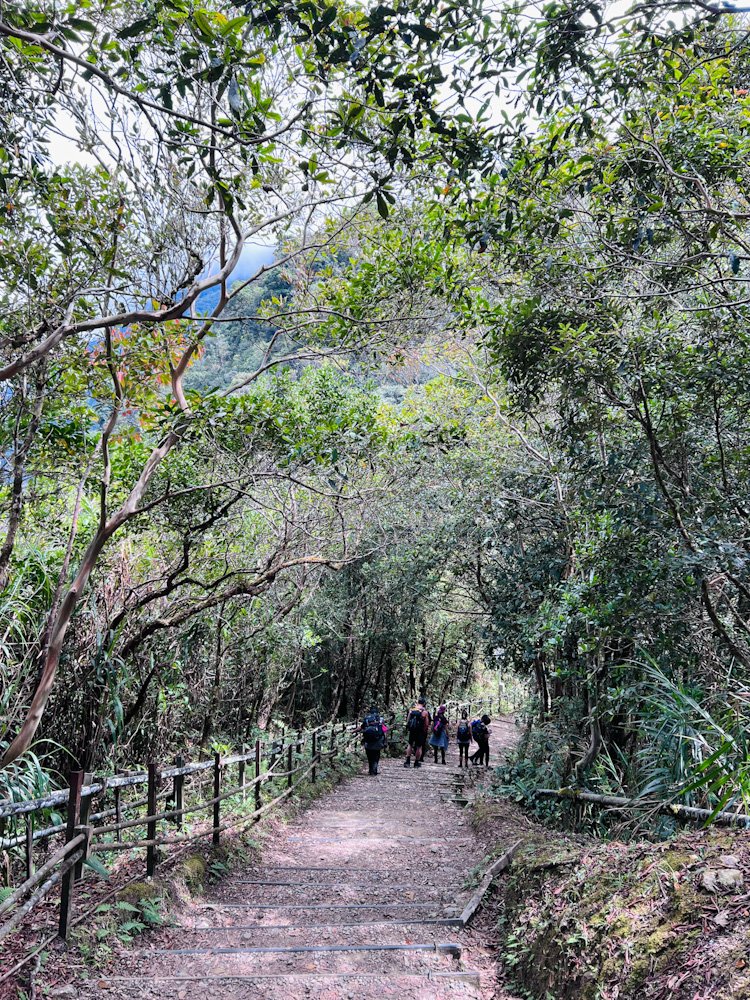
Day 1: 6km with 1,400m elevation gain over 4-6hrs, continuous stone steps (SAC T2) all the way up to Panalaban Base Camp.
Day 2: 3km with 800m elevation gain over 2-4hrs, stairs and steps with last 1km of steeper granite sections (SAC T3) that will require some scrambling. Then, full descent that includes 2-4hrs back to Base Camp for breakfast and 4-6hrs same way back to Timpohon Gate.
Are You Fit Enough to Climb Mount Kinabalu?
You do not need to be an athlete to climb Mount Kinabalu but you do need to show up prepared. A simple gauge: if you can comfortably run 10km in an hour or easily climb 50 floors of stairs without stopping, you are in good shape. If that feels out of reach right now, 8-12 weeks of targeted training will go a long way for how much of the mountain you get to take in.
The most common mistake is underestimating the cumulative toll of 1,400m elevation gain on Day 1, then waking up on Day 2 with heavy legs for the summit push and full descent. Focus on training up your cardio (running) and muscular (stairs climbing) endurance as well as ankle mobility for injury prevention.
With proper preparation and pacing, anyone with moderate fitness can complete the climb.
*Climbers with certain medical conditions including heart disease, high blood pressure, severe asthma, epilepsy, and diabetes, are advised not to attempt the climb and should consult a doctor before booking. Pregnancy is also not recommended. If you are in any doubt about your health or fitness, speak to your doctor before committing to the permit.
Altitude Sickness (AMS) on Mount Kinabalu: What Every Climber Should Know
Altitude sickness (AMS) typically sets in at 2,500m with the risk increasing significantly above 3,000m. The general acclimatisation guideline for trekking above 3,000m is to not increase sleeping altitude by more than 500m per day and to take a rest day for every 1,000m gained. This is to help the body adapt.
Can altitude sickness happen on Mount Kinabalu? Yes, it can. The climb ascends from 1,860m to 3,272m in a single day on Day 1 which is faster than recommended, so some hikers may feel mild symptoms like headaches, shortness of breath, fatigue or poor sleep if they ascend too quickly.
You will reach 2,500m elevation roughly 3km into the trail where breathing becomes more laboured and the legs start to feel heavier. This is your body adjusting to thinner air, not a sign of weakness, and exactly the point to slow your pace rather than push through. Take advantage of every rest hut on the trail even if you feel fine to acclimatise and remember to stay hydrated. A headache is often a hydration signal and the fix is to stop, drink, and rest before continuing. If your symptoms worsen, inform your guide immediately and plan for descend — AMS can quickly develop to become life-threatening within 12-24hrs if ignored.
To reduce the risk, consider spending a night or two in Kundasang (1,800m) to acclimatise before your climb, especially if travelling in from low-lying cities. Some climbers also take Acetazolamide as a preventive measure, usually starting a day before the ascent. Prescription is required as not everyone may be suitable and side effects vary so always consult your doctor. For our group, half of us took it while others didn’t and everyone completed the climb without issues. AMS does not discriminate and can occur to anyone regardless of fitness or age which is why preparation, pacing and hydration matter most.
What to Expect: Mount Kinabalu Itinerary – Terrain, Routes, Cut-Off Timings & Staying at Panalaban Base Camp
There used to be two routes up Mount Kinabalu, but the Mesilau Route has been permanently closed since the 2015 earthquake. Today, the only way up Mount Kinabalu is via the Timpohon Route by hiking.
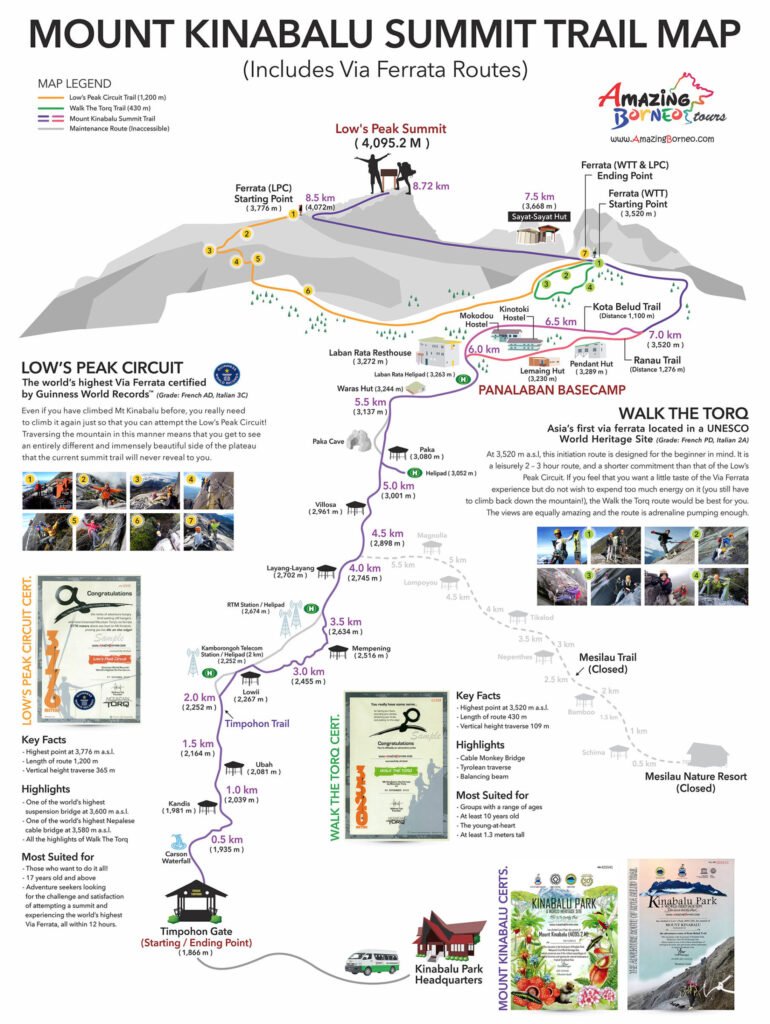
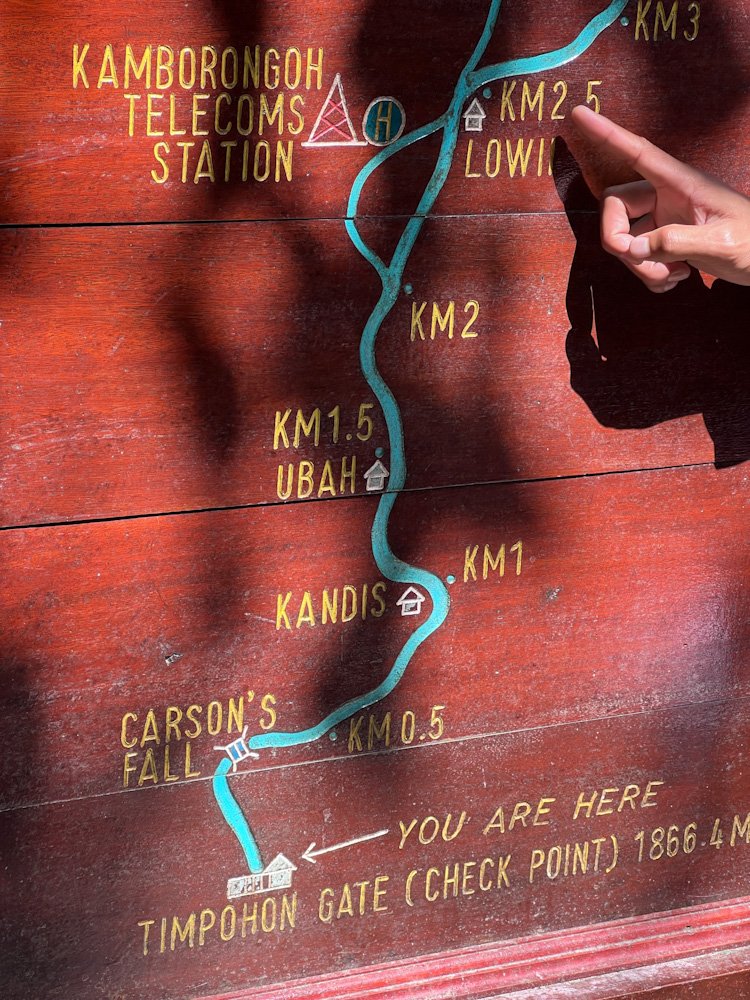
Kinabalu Park Office is where all climbers register, meet their guides and collect their climbing passes before the shuttled transfer to Timpohon Gate. There will be bathrooms and a small shop at the gate for you to do some last minute stock up of snacks and cooked noodles. On trail, rest huts appear every 0.5-1km with a dry toilet. Bring sufficient water – there are no reliable water points and even so, water is untreated.
See: Climbing Mount Kinabalu (Part 1) – Day 1 From Timpohon Gate to Panalaban Base Camp for detailed breakdown of each stop point and what you will see on trail.
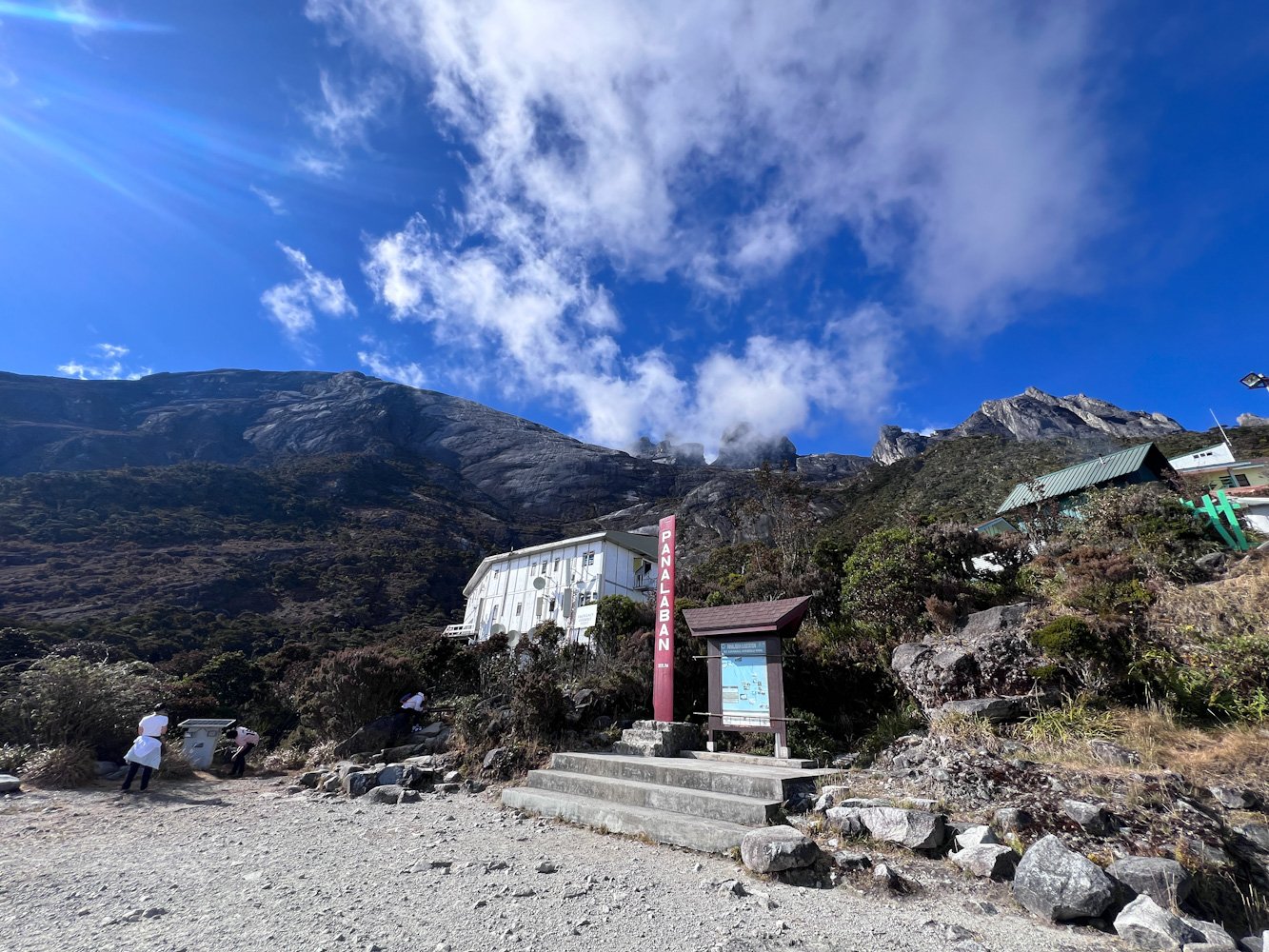
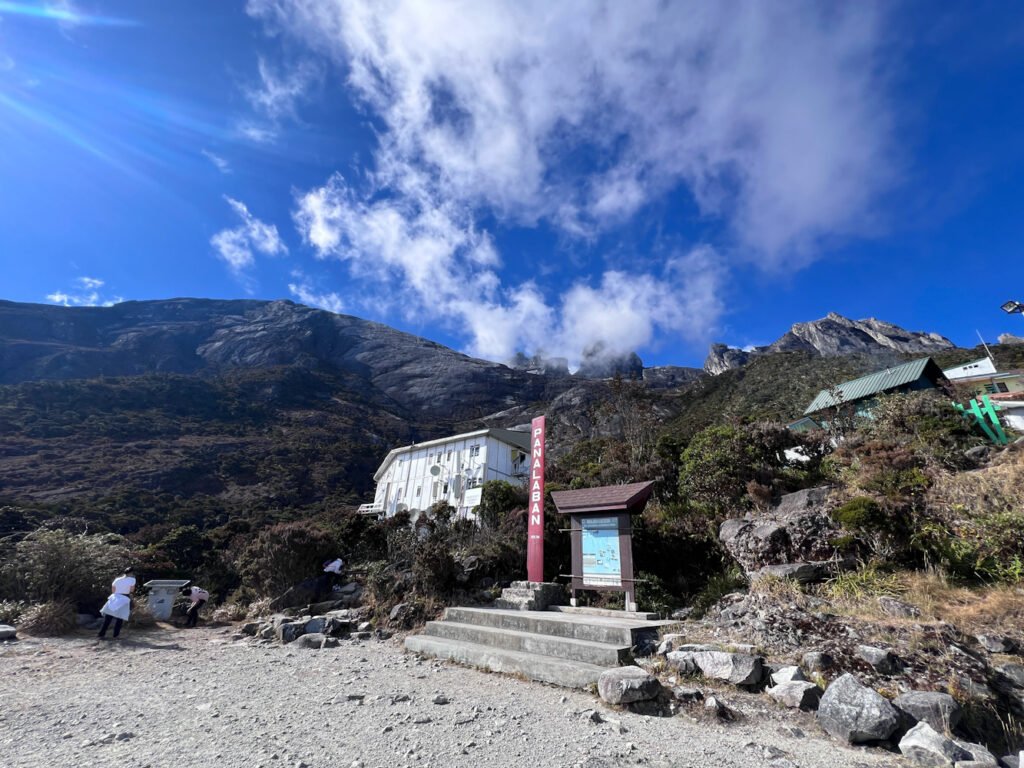
At Panalaban Base Camp, there are four guesthouses — Lemaing Hut (for Malaysians only) and Panalaban Hostel by Sabah Parks, Pendant Hut (reserved for Via Ferrata climbers) by Mountain Torq and Laban Rata by Sutera Sanctuary. All accommodation is hostel-style with shared bathrooms and no heating or hot showers. Only Laban Rata has a limited number of private en-suite rooms.
All climbers also eat at Laban Rata’s Dining Hall served in buffet-style at fixed meal times – 4.30-7pm, 2-3.30am, 7.30-10.30am. Miss a service and your options are your own food or whatever snacks or cup noodles remain in the small grocer at the back (cash-only, premium prices, follow kitchen hours). There are free water dispensers at Panalaban Hostel though hot drinking water may be subject to electricity availability.
I booked Panalaban Hostel directly through Sabah Parks (include permit, accomodation and meals) without going through any of the tour operators. With a group of 12, we were able to effectively select our beds and have the whole hostel to ourselves. The booking guide is in the next section below.
See: Climbing Mount Kinabalu (Part 2) – Staying at Panalaban Base Camp for full review of what to expect at Base Camp.
On summit push, anyone who doesn’t reach Sayat-Sayat Checkpoint by 5.30am will not be allowed to continue to the summit. For descent, you return the same way unless you opted for the Via Ferrata which has strict cut-off timings. I was glad to not opt for the ferrata and took my time descending to enjoy the views which you wouldn’t be able to during the dark summit climb.
From here, besides the check-out time at 10.30am, the last timing to note would be the last shuttle from Timpohon Gate back to the Park Office between 6-7pm – the park closes at 7.30pm.
See: Climbing Mount Kinabalu (Part 3) – Day 2 Summit Push, Low’s Peak & Descent
The table below summarises all the important points and timings:
| Time | Itinerary | What to expect · what to see |
|---|---|---|
From 07:00 |
Registration Kinabalu Park Office |
Collect climbing pass (worn at all times), meet guide, hire porter and/or rent hiking poles if needed. Luggage deposit at Sutera Sanctuary beside the office. Can head for breakfast or pack lunch before coming back for transport to Gate. |
Transfer to Timpohon |
Short 10-15min shuttle transfer from Kinabalu Park Office to Timpohon Gate. | |
Latest Start Time: 10:30 |
Briefing by Guide & Trail Begins Timpohon Gate (1,866m) · 6km ascent + 1,400m elevation gain |
There are bathrooms and a small provision shop at the gate – last chance to stock up snacks and water. Trail begins with steps downwards to Carson Waterfall. |
4 – 6 hrs |
Rest Huts, every 0.5–1km Total 7, each with toilet – Kandis, Ubah, Lowii, Mempening, Layang-Layang, Villosa, Paka Cave |
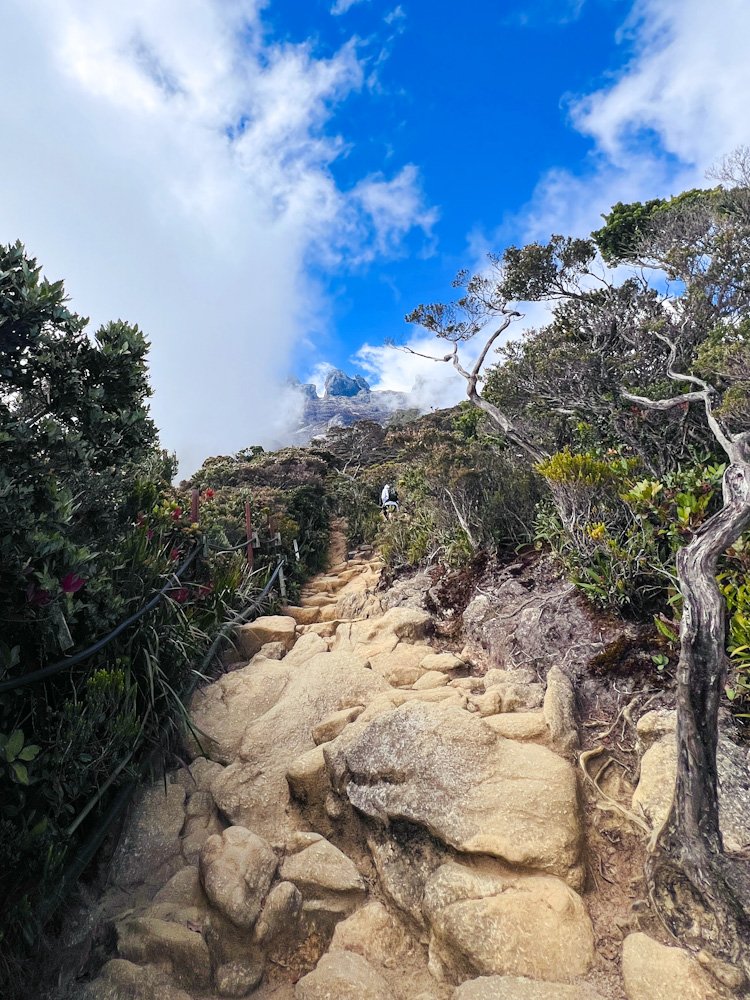
Start with mossy lowland rainforest with wooden steps and dense tree roots. Rhododendrons, pitcher plants and wild orchids appear as you gain altitude. Trail then opens up to subalpine shrublands and dramatic views of the peaks with well-paved stone steps. Stop at every hut even if you feel strong to acclimatise and hydrate but not too long for body to start cooling down. Take longer lunch at Layang-Layang (4km/2,702m) for acclimatisation, before heading up above 3,000m. |
Arrive at Base Camp Panalaban Base Camp (3,272m) |
Rejoice! Check in, rest and take a shower if you wish, before the sun sets and water turn freezing cold. Explore and enjoy the view. Free water dispensers at Panalaban Hostel. Postcards and stamps can be purchased at Pendant Hut where highest postbox of Malaysia is located. | |
From 16:30 Ends: 19:00 |
Dinner Laban Rata Dining Hall |
Hot buffet dinner with variety of local, western and vegetarian options. Temp drops below 2°C overnight so layer up. Lights out by 20:00 strongly recommended. |
| Time | Itinerary | What to expect · what to see |
|---|---|---|
From 02:00 Ends: 03:30 |
Supper Laban Rata Dining Hall |
Simpler options of hot drinks and food. Too heavy supper will hinder the hike. Pack enough water, coffee/tea in thermal flask and light snacks to go. It will be cold and dark. Headlamp, warm layers, and gloves are non-negotiable. Wear or bring sun protection. Remember to bring along your climb pass. |
2 – 4 hours Sayat-Sayat Cut Off: 05:30 |
Summit Push 3km ascent + 800m elevation gain · Sayat-Sayat Checkpoint (3,668m) |
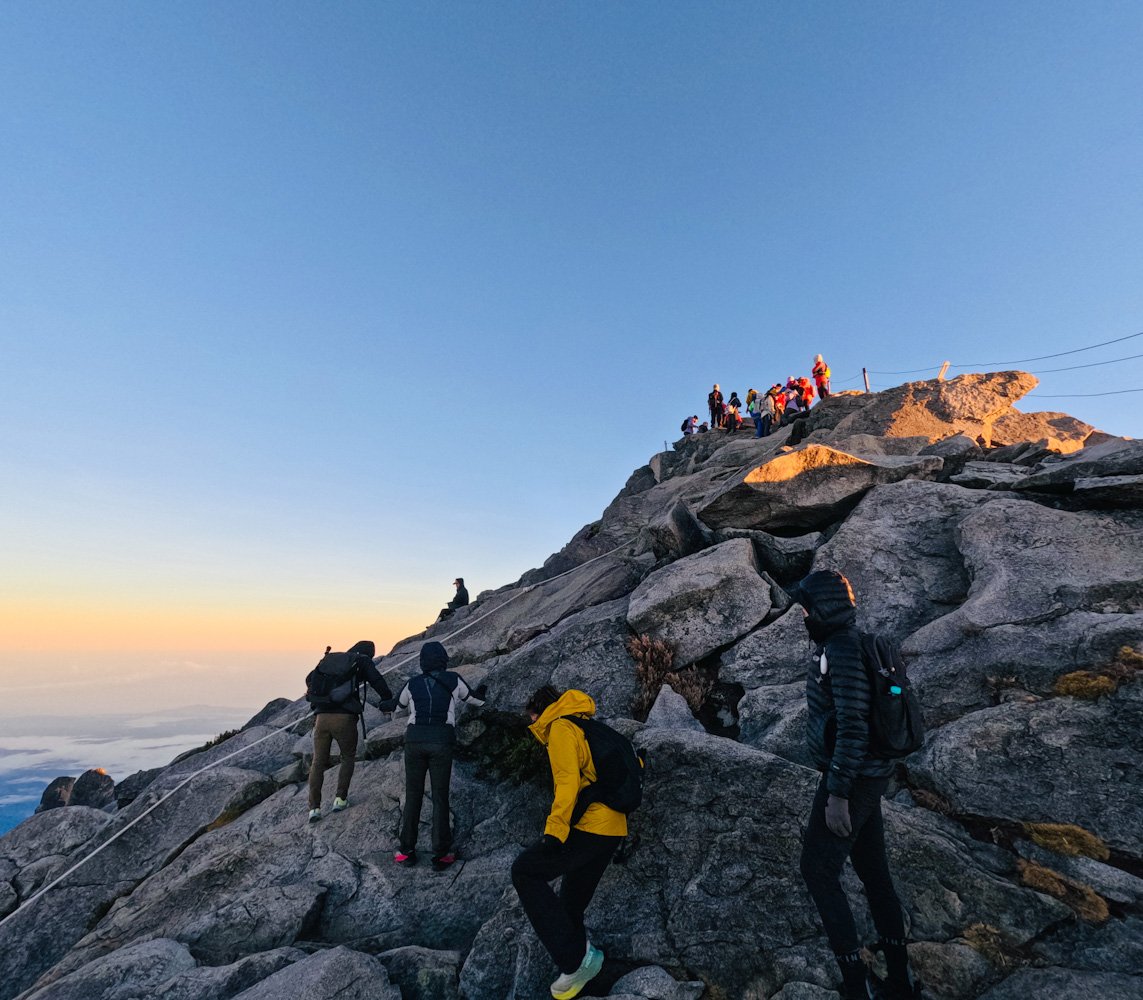
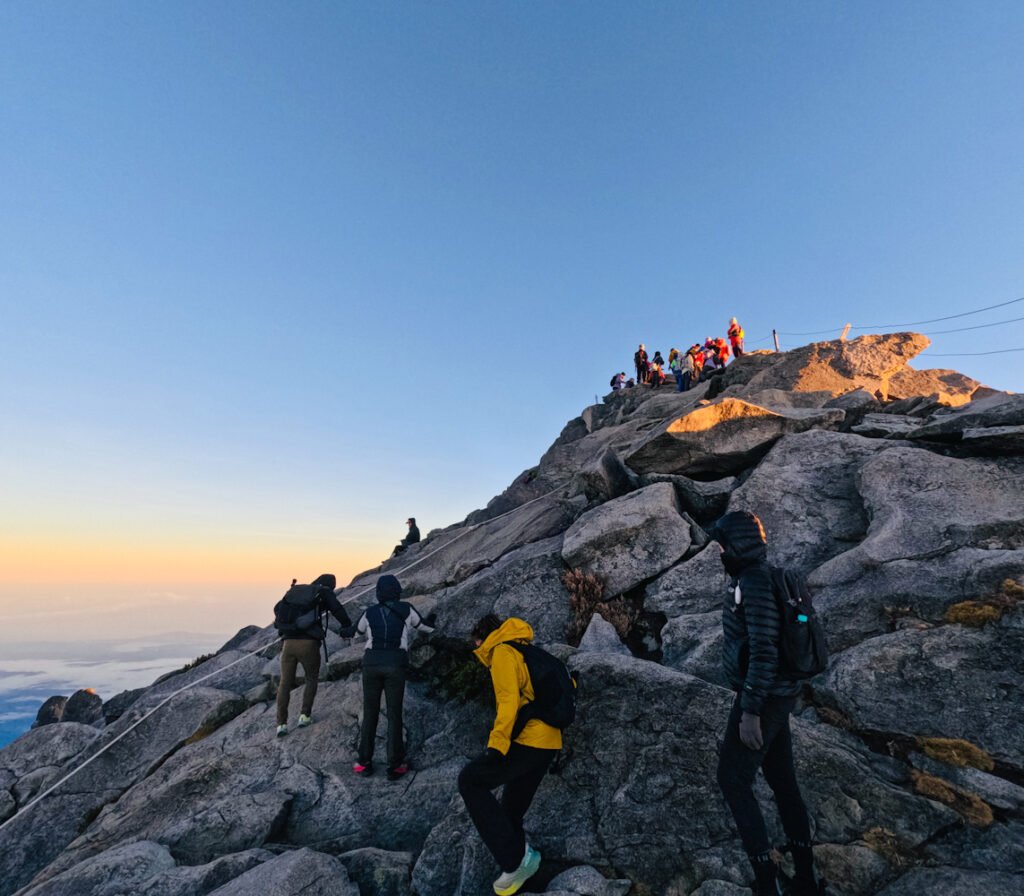
Trail transitions to open granite slabs. Last 1km is the steepest, supported by fixed ropes. Pace yourself and breathe steadily. Remember to look up at the stars! Flash your climb pass as you pass through Sayat-Sayat. Guides will turn back those who do not reach by cut-off time. Toilets available at Sayat-Sayat. |
Mount K Summit Low’s Peak (4,095m), Highest point in SEA |
Sunrise is between 05:45-06:15. There may be a queue so wait for your turn to snap a shot at the summit. Be considerate and don’t hog the sign for too long. It will be very cold. If you have good weather, find a cosy spot and whip out your hot coffee/tea to savour the moment. | |
2 – 4hours Via Ferrata Cut Off: 06:30 / 07:15 |
Descent to Base Camp |
If you have clear weather, it will start to get warm. Put on sun protection. Take your time down the slabs and take in the views you couldn’t see in the dark earlier. If you opted for Via Ferrata, arrive at your designated starting point on time. |
From 07:30 Ends: 10:30 |
Breakfast & Check Out Laban Rata Dining Hall |
Hot buffet breakfast will be served until check-out. Recharge, refuel and rest. Pack up and check out by 10:30. |
| Time | Itinerary | What to expect |
|---|---|---|
4 –6 hours |
Descent to Timpohon Same way down |
Same trail, same stone steps — but legs will know the difference. Trekking poles will help most people on the downhill. |
Park Closes: 19:30 |
Arrive at Timpohon Gate & Transfer to Park Office |
Take the transport back to Kinabalu Park Office. Collect your climbing cert and/or medal from the office before you go. |
How Much Does It Cost to Climb Mount Kinabalu in 2026?
The cost of climbing Mount Kinabalu can range from MYR 700 to over MYR 3,000 per person and it all depends on – your nationality (Malaysian / Foreigner), group size, accomodation, descent option, and most importantly, whether you plan to DIY or go through a tour operator.
I went by the DIY route, booking my climb permit and accomodation directly through Sabah Parks and spent around MYR 1,200 as a foreigner in 2024. This included a few optional items as well as tips for our guides and porter. As of 2026, the rate at Panalaban Hostel has gone up by MYR 100 per night so expect slightly higher overall cost.
Here is the breakdown of the 2026 actual climbing cost:
| Item | Payment | Malaysian | Foreigner |
|---|---|---|---|
Climb Permit 17yo & below pays half of full cost |
Online | MYR 100 | MYR 400 |
Panalaban Hostel (2D1N + 3 meals) Lemaing Hut (Malaysians only) costs MYR 365 |
Online | MYR 565 | MYR 565 |
Mandatory Insurance |
Online | MYR 10 | MYR 10 |
Service Charge |
Online | 7% | 7% |
| Item | Payment | Malaysian | Foreigner |
|---|---|---|---|
Conservation Fee Paid at entrance · 17yo & below pays half of full cost |
Cashless | MYR 10 | MYR 50 |
Mandatory Guide MYR 350 per guide · 1 guide : 5 climbers |
Cash | MYR 70+ | MYR 70+ |
Porter optional MYR 14/kg · max 10kg/bag · round trip |
Cash | varies | varies |
Trekking Pole Rental optional MYR 10 per pole |
Cash | MYR 10 | MYR 10 |
Two-way Transfer (Timpohon Gate-Park Office) |
Cash | MYR 10 | MYR 10 |
Baggage Deposit at Sutera optional MYR 12 per bag |
Cash | MYR 12 | MYR 12 |
Tourism Tax on Day 2 Foreigners only · per night · though no one collected from us |
Cash | — | MYR 10 |
Completion Cert / Medal on Day 2 · optional |
Cashless | MYR 10–30 | MYR 10–30 |
| Item | Payment | Malaysian | Foreigner |
|---|---|---|---|
Tips on Day 2 Recommend at least 10% of fees |
Cash | varies | varies |
| 2026 Cost | Malaysian | Foreigner | |
|---|---|---|---|
Excluding Optional Items & Tips |
MYR 800+ | MYR 1,200+ | |
How to Book a Mount Kinabalu Climb: DIY Under S$500 vs. Package Tours
The decision to DIY or not boils down to timing, budget, and how much planning you are willing to be involved in. With limited daily permits, securing your slot early is the most important factor if you’re aiming for the best months (Feb-Apr).
Step 1: Set the Parameters
Decide on your target months/dates and descend option (normal or Via Ferrata).
Step 2: Book Early (Critical if DIY)
The most affordable way to climb Mount Kinabalu is to DIY and book directly through Sabah Parks.
- Secure your climb permit along with accomodation via the Sabah Parks Reservation portal (link below).
- The portal typically opens in Sep–Oct for the following year and popular months can sell out within weeks.
- We booked our Apr 2024 climb in early-Oct 2023. By mid-Oct, peak dates were fully taken.
- If you plan to do the via ferrata, book through Mountain Torq, the official operator managing all Mount Kinabalu Via Ferrata activities and Pendant Hut.
Tip: Check the reservation portal frequently from end-Sep and book right away when it opens — it may go down due to high traffic. If you miss this window, your next best option is to book through a tour operator.
Step 3: Plan Your Logistics
Going DIY means arranging your own transport and pre-climb stay, but the savings can be significant. To help you with cost comparison:
- Private Hire via Grab (Kota Kinabalu-Kundasang, 1-way): ~MYR 300/car, 2hrs
- Bus via Easybook (Kota Kinabalu-Kundasang, 1-way): MYR 30–50, 3–4hrs
- Kundasang Accommodation: MYR 80–200 per room per night
- Transport to Park HQ: MYR 20-50, depending on distance
- Prepare Cash and have E-Payment ready
Tip: Guides are assigned at a ratio of 1 guide : 5 climbers. Solo travellers/small groups can consider going to the Park Office early to join others to share costs.
Before you book: Consider a Tour Package
Going by a tour operator may be more convenient and ideal if you are booking last minute, prefer zero planning or are travelling solo/in small group size. They typically include:
- Transport to/from Kota Kinabalu
- Transport to/from Park Office
- Permit, accomodation, add-ons (porter, trekking gear, ferrata)
- Additional pre- and post-climb meals, logistics and accommodation
Whether you decide to DIY or get a package, just make sure to go through the official booking platforms and reliable agencies to ensure you properly secure your permit and climbing slot.
- Official Website/Operator – Direct Booking:
→ Sabah Parks | Sabah Parks Reservation Portal
→ Via Ferrata: Mountain Torq - Reputable Tour Agencies in Sabah:
→ MountKinabalu.com (often confused to be the official website but is actually a tour agency)
→ Borneo Calling
→ Sabah Travels
→ Amazing Borneo - Booking Apps:
→ Klook | Klook (Via Ferrata)
Packing Smart for Mount Kinabalu – Do You Need a Porter?
As with any multi-day treks, it helps to keep your pack light for easy movement. At the same time, simple luxuries can sometimes make a huge difference in boosting your comfort and motivation on trek. Packing smart helps to achieve the balance between having your comforts and managing your bagload.
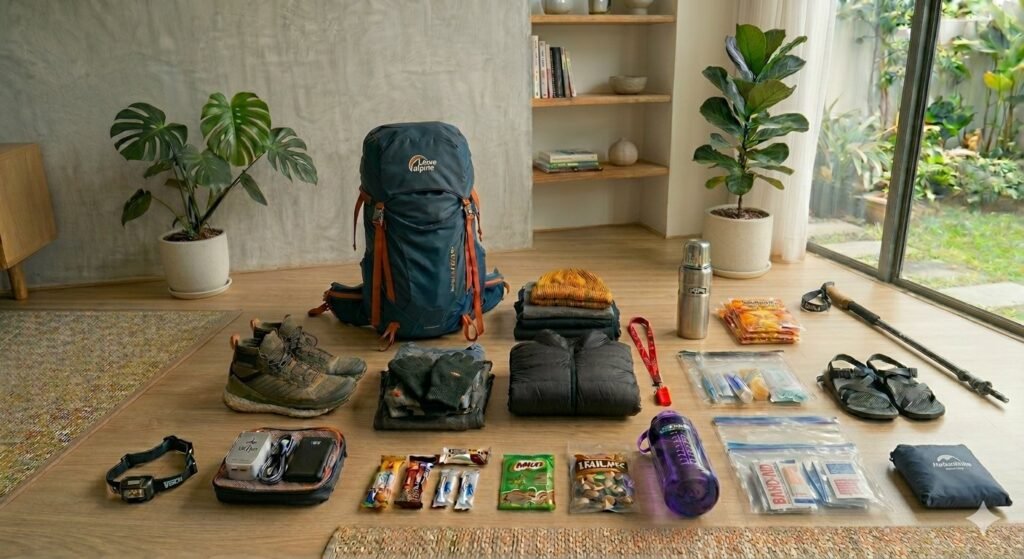
The trick is to know and choose what’s important. You will move through a range of conditions on this trek, from warm tropical forest to near-zero at the summit. The non-negotiables will be your broken-in hiking boots, moisture-wicking base layers, a light down/fleece jacket, a rain jacket/windbreaker, gloves and sun protection. Luxury items like a thermal flask and handwarmers will allow you to stay longer comfortably on the summit as you await the sunrise. A general guideline for a 2D1N trek is to keep your bagload at 7-8kg.
If this is your first high-altitude trek or the 10k run is still not so easy, it will be wise to consider a porter. This way, you can reduce your load to 2-3kg, carrying only what you need on the trail – porters do not follow you on trek, they hike directly up to Base Camp. The lighter load will help you move better through high altitude and you wouldn’t have to skimp on the luxuries to make your stay at Base Camp more comfortable. Beyond the practical, hiring a porter is also a direct way of supporting the local community.
See: 2D1N Mount Kinabalu Packing Guide: What I Packed & Tips for Using (or Skipping) a Porter
Before You Go: Important Notes for First-Timers
While a mandatory insurance is usually included along with your climb permit, it only covers the bare minimum. For any high-altitude treks, it is strongly advised to get a travel insurance to cover any medical and emergency evacuation required. Most standard policies cover up to 3,000m only (Mount Kinabalu is 4,095.2m) so make sure to read the fine print and ensure you can be adequately covered before purchasing.
There are no ATMs at the Park Office and on the mountain, so withdraw enough cash in Kota Kinabalu or Kundasang for the payments or if you wish to make any personal purchases. Mobile signal also gets sketchy on Panalaban Base Camp and on some parts of the trail, and drone flying within Kinabalu Park is strictly prohibited without a prior permit from Sabah Parks.
Last but not least, for the indigenous Kadazan-Dusun people of Sabah, Mount Kinabalu is a sacred peak believed to be a bridge between worlds. To climb Mount Kinabalu is to walk through this living legend. Tread respectfully on the trail, toward the mountain and the flora and fauna. Stay on designated paths, do not venture off marked routes, and leave no trace of your passing. What you carry in, you carry out. The mountain has stood long before any of us arrived, and with care, it will long outlast our footprints.
Mount Kinabalu FAQ – Everything Else Not Covered Above
Can I climb Mount Kinabalu in one day?
It is possible to climb Mount Kinabalu in a single day but only with special approval from Sabah Parks. To apply, submit your request in advance along with any relevant supporting credentials directly to Sabah Parks — approval is not guaranteed and is granted at their discretion.
Can I climb Mount Kinabalu without a guide?
No, a guide is mandatory by local regulations.
Can I climb solo?
Yes, you can but a guide is mandatory. Guides can be hired at Kinabalu Park Office on the day of your climb. They are assigned at a ratio of 1 guide : 5 climbers. Solo travellers/small groups can consider going to the Park Office early to join others to share costs.
Do you need a permit to climb Mount Kinabalu?
Yes, you will need a permit. Permits are issued by Sabah Parks. Refer to the guide above on how to book your permit.
Is there an age limit for climbing Mount Kinabalu?
There are no official age restrictions as long as you are of good health and physical condition. Toddlers have been reported to have completed the climb and the oldest known person to climb Mount Kinabalu is 96! Nonetheless, for a trail of technical grade T2-T3, it would be more suitable for children aged 10 or older. For the descent by Via Ferrata, you will have to be at least 16.
Can you climb Mount Kinabalu with no hiking experience?
With adequate preparation and good pacing, anyone of moderate fitness and of good health should be able to climb Mount Kinabalu. Refer to the guide above on fitness.
Is there any cut-off time for climbing Mount Kinabalu?
There is no official cut-off for Day 1 ascent, but start early — dinner service ends at 7pm and it gets cold quickly after sunset. On summit day, the only cut-off is 5.30am at Sayat-Sayat Checkpoint and check out time is 10.30am. The last shuttle from Timpohon Gate is between 6-7pm; after that, expect extra cost.
Via Ferrata climbers have to attend a mandatory briefing at Pendant Hut 3pm on Day 1. On summit day, they also have to reach the starting point for descend by 6.30am (Low’s Peak Circuit) or 7.15am (Walk the Torq); otherwise, continue down the standard route with no reimbursement.
Refer to summary of all important timings above.
Should I take altitude sickness medication for Mount Kinabalu?
Refer to AMS guide above.
Are there toilets or water refill point on the Mount Kinabalu climbing trail?
There is a dry toilet accompanying each resting hut every 0.5-1km along the trail. Bring sufficient water as there are no treated water refill points until Panalaban Base Camp. See summary of what to expect above.
Is there internet connection or wifi on Mount Kinabalu?
There is no free or reliable WiFi throughout the trail. Use your own roaming or local Malaysian SIM card data (Celcom or Maxis). Do note that mobile signal gets sketchy on Panalaban Base Camp and on some parts of the trail.
Are there showering facilities and should I shower at Panalaban Base Camp?
All accommodation comes with shared proper seated toilets and shower facilities. However, there is no heating or hot water so if you choose to shower, it is best to do so before sunset.
I gave it a try — refreshing, but definitely freezing. Some friends skipped it to avoid getting sick and used wet wipes instead. It really comes down to what you’re comfortable with and how your body handles the cold.
See: Climbing Mount Kinabalu (Part 2) – Staying at Panalaban Base Camp for full review of what to expect at Base Camp.
Are there shops at Panalaban Base Camp?
There is only 1 small grocer tucked behind the dining hall at Laban Rata. It stocks simple items like biscuits, snacks, and cup noodles at premium prices. You’ll also find a few souvenirs such as postcards, magnets, and beanies. Do note that they take in cash only.
See: Climbing Mount Kinabalu (Part 2) – Staying at Panalaban Base Camp for full review of what to expect at Base Camp.
Where is the postbox at Mount Kinabalu?
The highest postbox in Malaysia is located along the stairs up to Pendant Hut — just look out for the bright red box. You can buy postcards at the Laban Rata grocer or Pendant Hut, buy stamps and get it stamped with a special Mount Kinabalu chop from the staff at Pendant Hut before dropping them in the postbox.
How cold is it really on Mount Kinabalu summit?
I underestimated the cold and ended up freezing on the summit, partly because we arrived early at 4.30am and had to wait until sunrise around 6am. While temperatures at the summit are often around 0°C, the wind can make it feel like sub-zero before the sun comes up. How you feel will affect how much you can enjoy the sunrise. It is always better to layer up and remove items as needed than go underprepared. A thermal flask with a hot drink and handwarmers will help tremendously in keeping you warm too.
Do I need down jacket and gloves to climb Mount Kinabalu?
Yes, you will need proper gear on summit day. A down jacket will keep you warm, though a lighter one is usually sufficient if you layer well. Gloves are essential — your hands will be exposed to the cold on the steeper sections near the summit where some scrambling is required.
See: 2D1N Mount Kinabalu Packing Guide: What I Packed & Tips for Using (or Skipping) a Porter
Do I need hiking poles to climb Mount Kinabalu?
Hiking poles are recommended, though not essential if you’re used to hiking without them. I personally prefer going without — I feel lighter and move faster. That said, many people find them really helpful, especially on the descent when legs are tired, as they provide extra support and reduce strain.
BONUS: Will you climb Mount Kinabalu again?
Definite yes!
Have questions that aren’t covered here, or updates and experiences you’d like to share? Feel free to reach out and I’ll get back to you as soon as I can.